Damien Hirst Net Worth: How The Artist Made His Millions
Damien Hirst, a name that truly echoes through the halls of modern art, has always been a person of immense curiosity for many. People often wonder about the financial side of his incredible journey. It's almost natural to be curious about how someone becomes so successful in the art world, isn't it? His artwork, often pushing boundaries and sparking big conversations, has also gathered a very substantial amount of money.
When we talk about his wealth, it's not just a simple number. It's a reflection of a career that has, in a way, redefined what art can be and how it gets sold. His pieces, from the famous diamond skull to the animals preserved in formaldehyde, have captured the attention of collectors and the public alike. So, how did this artist, who once shocked the art scene, accumulate such an impressive fortune?
This article will look into the various parts of Damien Hirst's financial standing. We will talk about his early days, his big breakthroughs, and the smart ways he managed his art and his business. It's a story that, you know, shows a lot about both artistic vision and sharp business sense. We'll also consider how, like any important set of numbers, his wealth figures get refreshed with the latest information, reflecting changes in the market and his ongoing work.
Table of Contents
- Who is Damien Hirst?
- The Early Days and Rise to Fame
- Hirst's Unique Approach to the Art Market
- Major Artworks and Their Impact on His Wealth
- Direct Sales and the Sotheby's Auction
- How is Damien Hirst's Net Worth Estimated?
- Damien Hirst's Philanthropy and Investments
- The Ever-Changing Picture of His Finances
- Frequently Asked Questions about Damien Hirst's Net Worth
Who is Damien Hirst?
Damien Hirst, born in Bristol, England, in 1965, is a very well-known artist. He is perhaps the most famous of the group called the Young British Artists, or YBAs. He came to public attention in the late 1980s and early 1990s with art that was, you know, quite shocking and thought-provoking. His work often explores big ideas like life, death, art, and science. He really made a mark with his unusual creations.
He studied at Goldsmiths, University of London, and put together an important student exhibition called "Freeze" in 1988. This show helped launch his career and the careers of many other YBAs. It was a pivotal moment for contemporary art in Britain. His early work was, in a way, a challenge to traditional art forms, which got a lot of people talking.
Hirst's art often uses, you know, real animals, like sharks and sheep, preserved in formaldehyde. These pieces are very striking and have become symbols of his style. He also creates spot paintings, spin paintings, and medicine cabinet installations. His artistic output is quite diverse, and it really captures attention.
Personal Details and Bio Data
| Detail | Information |
|---|---|
| Full Name | Damien Steven Hirst |
| Born | June 7, 1965 |
| Birthplace | Bristol, England |
| Nationality | British |
| Occupation | Artist, Art Collector, Entrepreneur |
| Art Movement | Young British Artists (YBA) |
| Known For | Spot paintings, formaldehyde sculptures, diamond skull |
| Spouse/Partner | Sarah Lucas (former partner), Maia Norman (former partner) |
| Children | 3 sons (with Maia Norman) |
| Education | Goldsmiths, University of London |
The Early Days and Rise to Fame
Damien Hirst's path to becoming a wealthy artist started, you know, with a lot of grit and a strong vision. His early work at Goldsmiths in London showed a real willingness to experiment. The "Freeze" exhibition, which he organized himself, was a big deal. It showcased his own work and that of his friends, and it got the attention of important collectors like Charles Saatchi. This was, in a way, a launchpad for his career.
Saatchi became a major supporter, buying many of Hirst's early, rather provocative pieces. One of these was "The Physical Impossibility of Death in the Mind of Someone Living," which featured a tiger shark in a tank of formaldehyde. This artwork, you know, caused a huge stir and made Hirst a household name. It was a very bold statement.
His early success was built on a mix of shocking art, clever self-promotion, and a knack for getting people to talk. He understood the power of controversy, too. His art, which often dealt with big themes like life and death, resonated with many people, even if some found it disturbing. This period really set the stage for his future financial success.
Hirst's Unique Approach to the Art Market
What sets Damien Hirst apart, in a way, is his very unusual approach to selling art. He didn't just rely on art galleries and traditional dealers. He often took matters into his own hands. This direct approach, you know, helped him keep more of the profits from his work. It was a pretty smart move for an artist of his stature.
One of his most famous examples of this was the "Beautiful Inside My Head Forever" auction at Sotheby's in 2008. Instead of selling through galleries, he offered a huge collection of his new work directly to buyers. This was, frankly, unheard of for a living artist. It bypassed the usual art market structures, which was a bit risky but paid off hugely.
This auction brought in over £111 million, which was an incredible amount, especially since it happened just as the global financial crisis was starting. It showed his immense market power and his ability to, you know, dictate his own terms. This event truly cemented his reputation not just as an artist, but as a very clever business person, too. Learn more about art market trends on our site.
Major Artworks and Their Impact on His Wealth
Damien Hirst's net worth is, in large part, built upon the high value and sales of his most famous artworks. Pieces like "For the Love of God," his diamond-encrusted skull, are incredibly valuable. This particular piece, you know, is said to have been sold for £50 million, though the exact details are somewhat private. It's a striking example of his ability to create objects that command huge prices.
His formaldehyde pieces, such as "The Physical Impossibility of Death in the Mind of Someone Living" (the shark), have also sold for many millions. These works are, in a way, his signature pieces. They are instantly recognizable and have become icons of contemporary art. The demand for these unique creations drives their prices very high.
Even his less controversial works, like the spot paintings, have contributed significantly. He has produced thousands of these, and while individual prices vary, their sheer volume and consistent demand add up. His ability to produce a large body of work that maintains high market value is, you know, a key part of his financial story. It shows a consistent market interest in his output.
Direct Sales and the Sotheby's Auction
The "Beautiful Inside My Head Forever" auction in 2008 was, you know, a game-changing moment for Damien Hirst's finances. It was the first time a major artist sold an entire show directly through an auction house. This move cut out the galleries, meaning Hirst received a much larger share of the proceeds. It was a very bold and, frankly, unprecedented step.
The auction took place over two days and featured 223 new works. It was a massive undertaking. Despite the start of a global financial downturn, the auction was a huge success, bringing in £111 million ($198 million). This event, you know, truly showed his market strength. It proved that his name alone could draw in big buyers, even without the traditional gallery system.
This direct sale model has been, in a way, imitated by other artists since. It demonstrated a new path for artists to control their own market. For Hirst, it meant a huge injection of cash directly into his pocket, cementing his place as one of the wealthiest artists alive. It was, you know, a masterclass in financial strategy for an artist.
How is Damien Hirst's Net Worth Estimated?
Estimating someone's net worth, especially a figure like Damien Hirst, is a rather complex process. It's not just about counting cash in a bank. It involves looking at a lot of different things. For an artist, this includes the value of their unsold artworks, their personal art collection, properties they own, and any other investments. So, it's a very comprehensive calculation.
Financial publications and wealth trackers typically gather information from public records, art market sales data, and reports from auction houses. They also consider, you know, the value of his companies, like Science Ltd., which manages his artistic production and sales. It's about piecing together a big financial picture from various sources.
Because art values can change and private sales are not always public, these figures are always, you know, estimates. They provide a good idea, but they are not exact. The art market can be a bit unpredictable, so these numbers get refreshed and updated as new information comes in. It's a bit like tracking, you know, any complex financial system where data keeps getting revised.
Damien Hirst's Philanthropy and Investments
Beyond his personal wealth, Damien Hirst has also been involved in various philanthropic efforts. He has, for example, supported charities and art institutions. This shows a commitment to giving back to the art world and wider society. His generosity is, in a way, another aspect of his financial story.
He has also made significant investments. He owns a large personal art collection, which includes works by other famous artists. This collection itself is a valuable asset. Art, you know, can be a great investment, and Hirst, being an expert, has likely made some very smart choices in his own collecting. This adds to his overall financial strength.
Furthermore, he has invested in properties and other ventures. His business acumen extends beyond just selling his own art. These investments contribute to his long-term financial stability. It's clear he thinks about, you know, his money in a broader sense, not just what he earns from new art sales. This makes his financial picture even more interesting.
The Ever-Changing Picture of His Finances
The net worth of a prominent figure like Damien Hirst is not, you know, a fixed number. It's a figure that shifts and changes over time. Art market trends, new sales, and even the value of his existing collection can make the number go up or down. So, it's a dynamic figure that gets, in a way, constantly re-evaluated.
Just like how software updates keep things current and running smoothly, financial estimates for individuals like Hirst are regularly refreshed. For example, the latest update for Windows 11 includes cumulative reliability improvements, and similarly, financial reports get updated with new data. This ensures the figures are, you know, as accurate as possible based on the most recent information available. It's a continuous process of refinement.
His ongoing projects, exhibitions, and any new ventures will also influence his financial standing. He continues to create and innovate, which means his market presence remains strong. Keeping track of his financial journey is, in a way, like following a very active and successful business. His wealth, you know, is a reflection of his enduring impact on the art world and beyond. You can always check back on this page for updated information.
Frequently Asked Questions about Damien Hirst's Net Worth
How much is Damien Hirst's most expensive artwork worth?
Damien Hirst's most expensive artwork is generally considered to be "For the Love of God," the diamond-encrusted skull. It was reportedly sold for £50 million, or about $100 million at the time, in 2007. This makes it, you know, one of the most expensive pieces of art ever sold by a living artist. It's a truly remarkable sum for a single artwork.
What makes Damien Hirst's art so valuable?
Damien Hirst's art is valuable for several reasons. First, his work is very unique and often provokes strong reactions, which creates a lot of discussion and attention. Second, he has a very strong brand as an artist, built over decades of high-profile exhibitions and media coverage. Third, his direct sales strategies, like the Sotheby's auction, showed his market power. Finally, the rarity of some pieces and the demand from wealthy collectors contribute greatly to their high prices. It's a mix of artistic impact and, you know, market savvy.
Is Damien Hirst still making art?
Yes, Damien Hirst is still very much making art. He continues to create new works, exhibit them, and explore different themes and materials. He has, for example, recently worked on series like "The Currency," which involves NFTs and physical artworks. His creative output is, you know, ongoing and continues to evolve. He remains a very active figure in the contemporary art scene.
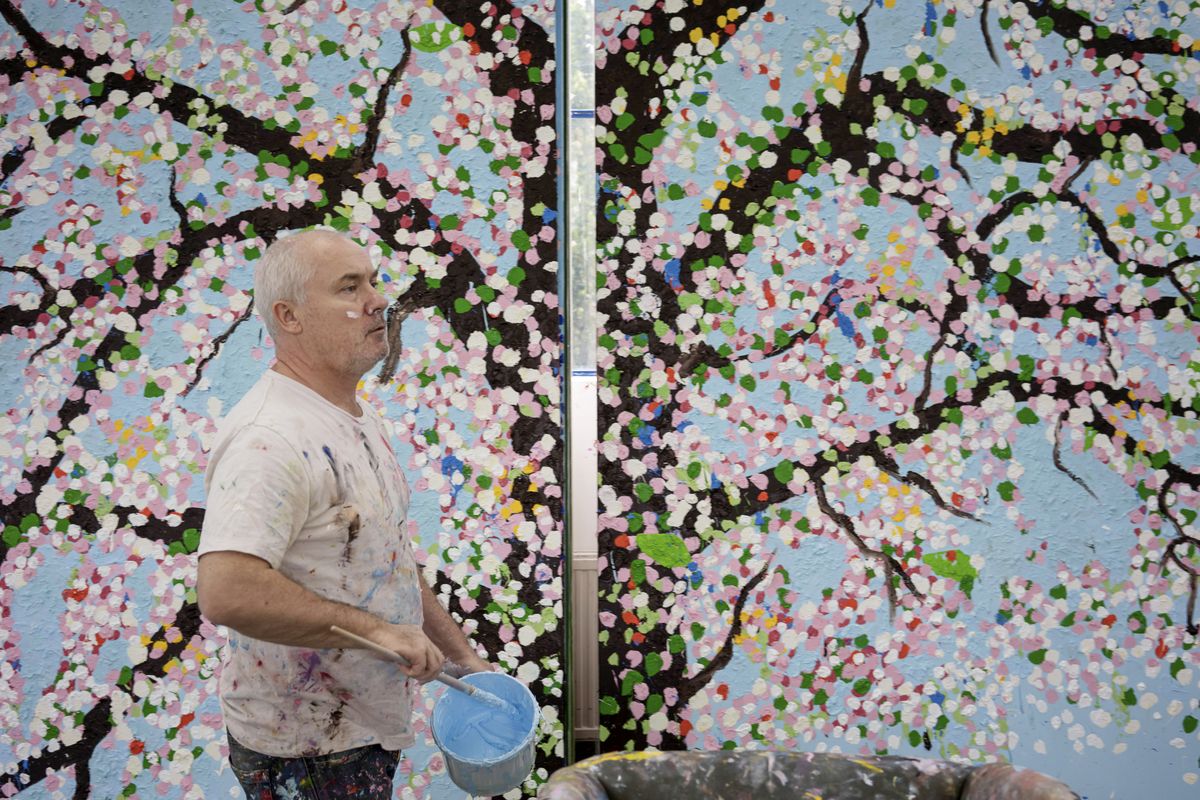
Damien Hirst’s Latest Paintings of Cherry Blossoms at Fondation Cartier
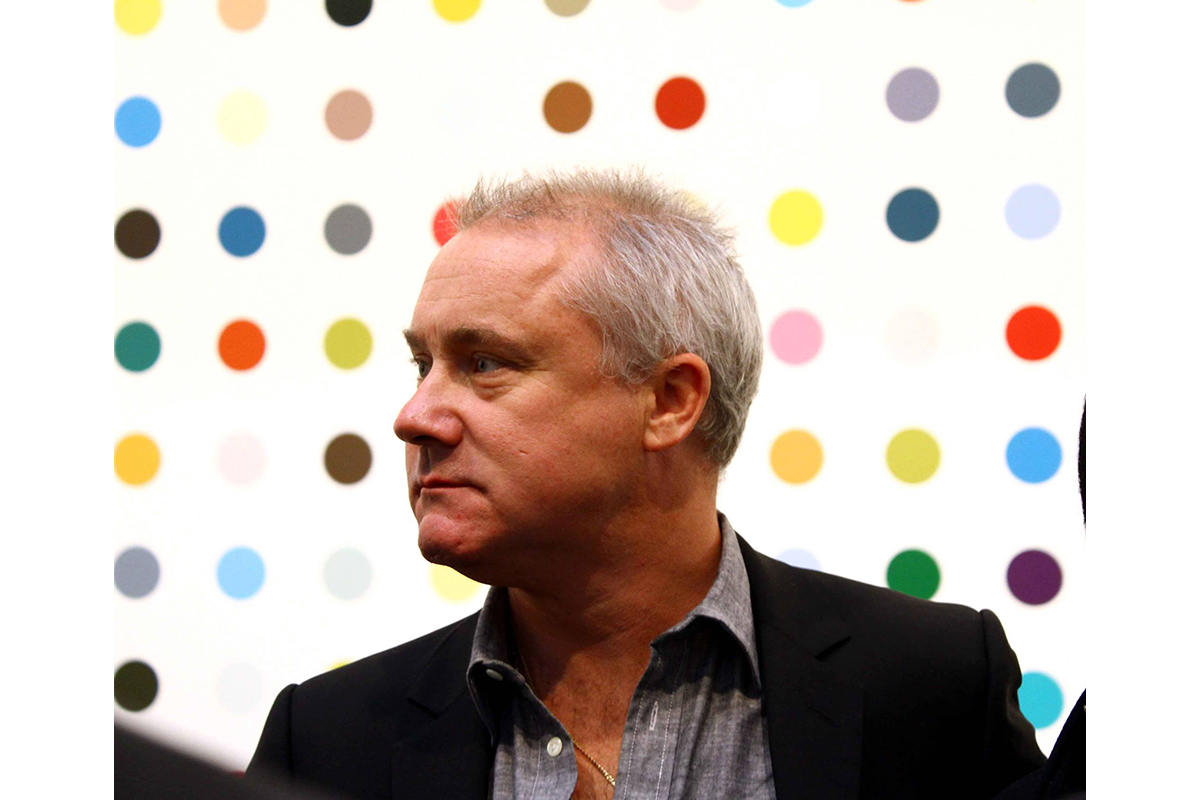
Latest Reports Show That Damien Hirst Created and Sold Over £8M Worth

Most Expensive Damien Hirst Art Pieces Sold at Auctions | Widewalls
